
Even by conservative assumptions that 5 to 10 per cent of infected individuals develop long Covid, India today may be home to 50 to 100 million infected individuals -- many silently coping with breathlessness, fatigue, palpitations, brain fog, or unexplained clotting tendencies.

Due to the rising COVID cases, the Centre is conducting mock drills to check facility-level preparedness and has instructed all states to ensure availability of oxygen, isolation beds, ventilators, and essential medicines, official sources had said.

India's active Covid case tally crossed the 5,000 mark with Kerala remaining the most affected state followed by Gujarat, West Bengal and Delhi, according to the Union health ministry data released on Friday.

There are 4,026 active cases in India and five fresh deaths have been reported in the last 24 hours.

All states have been instructed to ensure availability of oxygen, isolation beds, ventilators and essential medicines in view of rising cases of Covid, official sources said on Wednesday.

Amid an uptick in Covid cases in some parts of the country, Director General of the Indian Council of Medical Research (ICMR) Dr Rajiv Behl said the severity of infections as of now is generally mild and there was no cause for worry. Speaking about new Covid variants being traced, he said genome sequencing of samples in the west and south have shown that the new variants are not severe and are Omicron sub-variants. These are LF.7, XFG, JN.1 and NB. 1.8.1. The first three are more prevalent, Dr Behl said. "Samples from other places are being sequenced and we will know in a day or two if there are more variants." The ICMR DG said there has been an uptick in cases --first from the south, then west and now from northern India. All these cases are being monitored through the Integrated Disease Surveillance Programme (IDSP). Besides that, ICMR's nationwide respiratory virus sentinel surveillance network is keeping a watch on emerging infections and pathogens, he said. "Whenever cases increase, we look at three things. It's dependent on three factors with the first being how transmissible it is, conversely how fast the cases are increasing. Previously we saw Covid cases double in two days, but this time it is not that cases are increasing rapidly. "Secondly, are the new variants evading our previous immunity? When new variants come, they evade immunity -- be it natural or from the vaccine. But there's nothing to worry about at the moment," Dr Behl said. He also said that the third factor is the percentage of severe cases in all Covid instances. "Are we getting a very severe disease without comorbidities? As of now, the severity is generally low. There's nothing to worry about. We should be vigilant and we should always be prepared," the ICMR DG asserted. Dr Behl also informed reporters that the Union Health secretary chaired a meeting on Sunday that was also attended by the director general of health services and himself. "We have been closely monitoring the situation. We should be vigilant at this moment, but there is no cause to worry. The general public should be vigilant. There is no need to take any such action as of now," he said. The officer added that the WHO database has been showing that the new variants were not causing severe disease. "People do not need to take any immediate action. They should follow normal precautions. So, there is nothing special to do right now." Asked about the need for a booster dose, he said there is no need for vaccination as of now. "India has the capability to make vaccines and if need be, we can make any vaccine in no time."
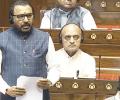
India has reported 59 cases of Human Metapneumovirus (HMPV) and two deaths due to co-morbidities between January 6 and 29, according to Union Minister Prataprao Jadhav. The virus primarily affects young children, the elderly, and immunocompromised individuals, leading to respiratory illnesses. The government has taken measures to monitor and control the spread of HMPV cases and create public awareness.

"The guidelines would cover all ethical issues."
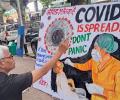
Delhi Chief Minister Rekha Gupta said there is no need to panic about COVID-19 cases, even as she asserted that the hospitals were fully prepared to tackle if the number rises.

Over the past few days, deaths due to heat stroke have been reported from different parts of the country including Uttar Pradesh, Bihar and Odisha.

There are currently no reported cases of Monkeypox in India even though cautionary measures will be put in place to prevent and control the spread of the disease, the Union health ministry said on Saturday.
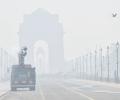
Four cities in neighbouring Pakistan and one in China are among the world's top 20 polluted cities.
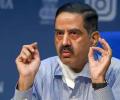
Bhargava, who is also a cardiologist, had tested positive for coronavirus infection around 7-8 days ago and was under home isolation
Amid growing concerns over the detection of human metapneumovirus cases in India, health experts have emphasised the virus is not new, and advised people to stay calm and take basic precautions.
George said this was detected months ago in Indian passengers who were screened at Singapore Airport.

Covid is growing milder with time but an occasional surge in cases is expected because the virus that causes it is now endemic and constantly evolving, say scientists while assuring that there is no cause for concern.
Indian Council of Medical Research Director General Balram Bhargava had on Monday recommended the use of hydroxychloroquine for treating healthcare workers handling suspected or confirmed coronavirus cases.

The attempted attack on the ICMR website was prevented by the firewall/security measures of NIC, they said, adding further steps are being taken to enhance cyber security.
The doctors treating SARS suspects or patients will use the Defence Research Development Organisation made Nuclear-Biological-Chemical weapon masks.
In response to a question on whether younger population were getting more affected, Indian Council of Medical Research Director General Dr Balram Bhargava said the comparison of data during the first and the second wave of COVID-19 has shown that there is not much age difference.
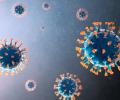
A case of COVID-19 sub-variant JN. 1 has been detected in Kerala as part of an ongoing routine surveillance activity of the Indian SARS-CoV-2 Genomics Consortium (INSACOG), a senior official from the Indian Council of Medical research (ICMR) said on Saturday.
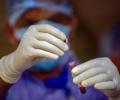
The scientist, who is from Mumbai, had come to Delhi few days ago and tested positive for the virus on Sunday morning.

The health ministry further informed that in addition to 162 plants already sanctioned, the states have requested Centre for more than 100 such additional plants which are also being sanctioned.
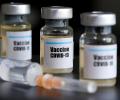
Phase-I clinical trials have revealed "excellent safety" of the two candidate vaccines indigenously developed by Bharat Biotech in collaboration with Indian Council of Medical Research and Cadila Healthcare Ltd and their immunogenicity testing is now in progress, minister of state for health Ashwini Choubey informed the Rajya Sabha on Tuesday.
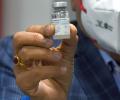
The method of data collection has a high risk of bias, the ICMR DG said.
The National Cancer Registry Programme was started by ICMR with a network of cancer registries across the country in December 1981.
"The homeopathy compound screened in vitro at NARI against HIV has been found to have a lot of potential in effectively killing the virus," Dr Ganguly told UNI. However, he refused to name the compound as there were Intellectual Property Rights issues involved. Moreover, there was a memorandum of understanding with the company which had given the compound, which is already being used in treatment of some other disease.

In a serious data breach, personally identifiable information of 815 million Indians has been up on the dark web for sale, according to a report by US-based cybersecurity firm Resecurity. Details such as Aadhaar and passport information along with names, phone numbers and addresses are available for sale online, it has said.
The trial in India is part of a multi-country initiative of the same vaccine candidate. Trials are already on in Germany and Belgium and initial results have given excellent safety data.
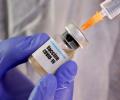
Covaxin is being developed by Bharat Biotech, in collaboration with the Indian Council of Medical Research - National Institute of Virology.

'All the big production houses are making superhero films, so I thought I should make one too. So I have made a genuine superhero film,' Vivek Agnihotri says about his new film, The Vaccine War.
The minister will review the COVID-19 situation at 11:30 am on Wednesday 'considering the international scenario', they said.
According to government sources, the matter was discussed by the national expert group on vaccine administration for COVID-19 in its last meeting held on August 22.

Her appointment as World Health Organisation's deputy director offers an opportunity to push for improving the medical research environment in India.

The government is taking the cutoff of about 100 days if reinfection occurs.

rediffGURU Dr Pananjay Tiwari lists the options and cost of pursuing an MBBS education outside of India.

However, the tender criteria demands that an entity must be eligible to conduct Beyond Visual Line of Sight operations in order to become eligible. Currently, no drone companies are eligible to do BVLOS operations, reports Arindam Majumder.
ICMR says it is following all globally accepted norms to fast-track vaccine and wants to 'cut red tape'.

The World Health Organisation has issued warning against XE, a new variant of Omicron first detected in the UK.

There is no scientific evidence so far to support the need for a booster vaccine dose against COVID-19, ICMR Director General Dr Balram Bhargava said on Monday underlining the completion of second dose for India's adult population is the priority for the government for now.
 © 2026 Rediff.com - Advertise with us - Disclaimer - Privacy Policy - Sitemap - Feedback - About us - Terms of use - Grievances